AYN Thor Handheld: The Complete 2026 Guide for Gamers Who Want It All
If you spend any time in handheld gaming forums, Discord servers, or YouTube comment sections, you have probably run into the name AYN Thor at least a dozen times this year. It shows up in retro gaming threads, in emulation setup guides, and even in conversations where people are comparing it against much pricier Windows ayn thor handheld. That kind of buzz does not happen by accident, and after digging into what this device actually offers, it is easy to see why it has become one of the most talked about releases in the dual-screen ayn thor handheld space.
The AYN Thor is not trying to be another slab-shaped Android ayn thor handheld competing purely on raw horsepower. It takes a completely different approach by folding open like a Nintendo DS, running two AMOLED screens at once, and packing flagship-level Qualcomm hardware inside a body that still fits comfortably in a jacket pocket. That combination of nostalgia and modern muscle is exactly what makes it worth a proper deep dive.
In this guide, we are going to walk through everything a buyer actually needs to know: the design, the different model tiers, real-world performance, emulation strength, battery behavior, cooling, common complaints from early adopters, and how it stacks up against rivals like the AYN Odin 3 and the AYANEO Pocket DS. By the end, you should have a clear picture of whether this ayn thor handheld deserves a spot in your bag.
What Exactly Is the AYN Thor Handheld
At its core, the AYN Thor is an Android-powered gaming ayn thor handheld built around a clamshell chassis, meaning it physically folds closed like a book or a classic DS console. Inside that shell sit two separate AMOLED panels, a full set of physical controls, and internals that are closer to a flagship smartphone from a couple of years back than a typical budget retro device. It is manufactured by AYN Technologies, a company that has spent the last several years carving out a name for itself in the Android ayn thor handheld space with its Odin line.
What separates the Thor from most of AYN’s earlier releases is the dual-screen layout. Instead of relying on a single display and software overlays for menus, maps, or secondary information, the Thor gives you a dedicated second panel that can mirror classic dual-screen consoles or run entirely separate content depending on the app. For anyone who grew up with a DS or 3DS in their pocket, the layout feels instantly familiar, even though the hardware underneath is a generation or two ahead.
The device is not locked into a single purpose either. Because it runs a customized build of Android, it can install apps straight from the Play Store, sideload APKs, run cloud gaming services, and handle a long list of emulators for older consoles. That flexibility is really the whole pitch here. You are not buying a single-purpose retro box; you are buying a pocket computer that happens to be shaped like your favorite childhood console and tuned specifically for gaming.
Design, Build Quality, and the Clamshell Form Factor
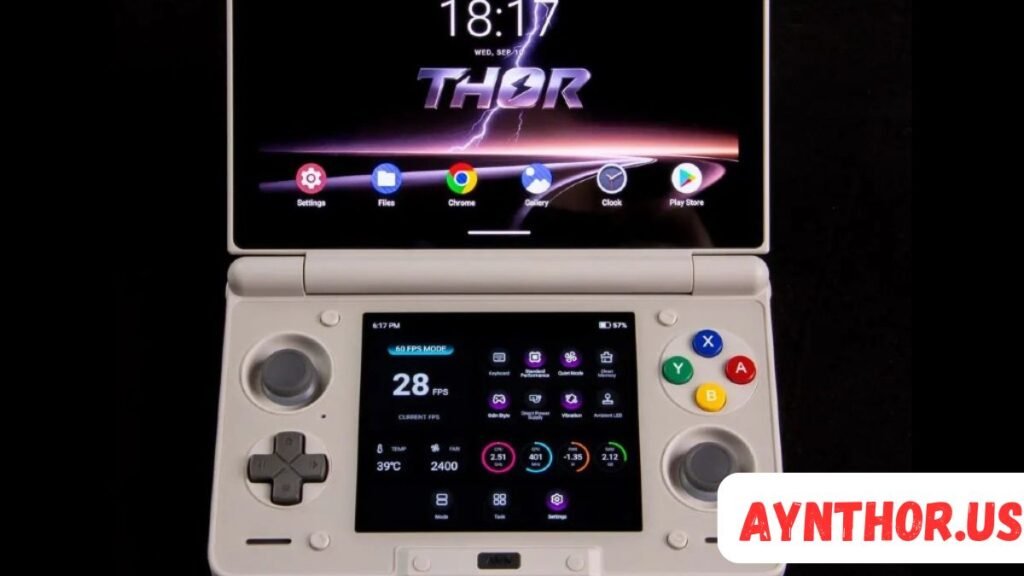
The first thing most people notice when they pick up an AYN Thor is how solid the hinge feels. Clamshell devices live or die by their hinge mechanism, since it takes the brunt of daily open-and-close wear over months or years of use. Early units have generally held up well here, with a hinge that feels tight rather than loose or wobbly, which is a relief for anyone who has owned a cheaper flip-style gadget that started rattling within a few weeks.
The outer shell is made from polycarbonate rather than metal, which keeps the overall weight manageable at a little under 400 grams. That is heavier than a phone, obviously, but still light enough to hold comfortably during a commute or a lunch break gaming session. On the back panel you will find the AYN branding along with ventilation cutouts and a small internal fan, both of which hint at the fact that this thing is built to actually push demanding workloads rather than just sip along at low power like a typical retro emulator ayn thor handhelds.
One quirk worth mentioning before you buy is that when the shell is closed, the face buttons and joysticks can occasionally leave faint pressure marks on the screen surface over time, especially if you toss it into a bag without any extra protection. It is a minor issue in the grand scheme of things, but it is common enough that a lot of owners recommend grabbing a screen protector or using the included foam insert whenever the device is not actively in use. Outside of that, the overall fit and finish feels closer to a premium product than a budget import, which is genuinely impressive at this price range.
Dual AMOLED Displays and Visual Quality
The dual-screen setup is really the headline feature, so it deserves its own detailed look. The primary display measures around six inches and runs at a sharp Full HD resolution with a 120Hz refresh rate, which is honestly higher than what a lot of dedicated gaming phones offer. The secondary screen sits just below it at roughly 3.92 inches, running at 60Hz, and is specifically shaped to match the aspect ratio needed for accurate DS and 3DS emulation.
Because both panels use AMOLED technology, colors come out rich and saturated, blacks are genuinely deep rather than the washed-out grey you get on cheaper LCD panels, and contrast holds up nicely even in games with a lot of shadow detail. This matters more than people expect for retro gaming specifically, since a lot of older pixel art and sprite work was designed with high-contrast displays in mind, and modern AMOLED screens do a great job of making those older titles pop in a way that budget LCD ayn thor handhelds simply cannot match.
The high refresh rate on the top screen also pays off in fast-paced modern titles, where smoother motion translates directly into snappier-feeling controls, particularly in platformers, shooters, and anything with quick camera panning. Touch responsiveness on both panels is solid too, which matters a lot for touchscreen-native mobile games as well as for stylus-based emulation of the original 3DS and DS libraries, where touch input was baked directly into the original game design.
Hardware Under the Hood and Everyday Performance
Underneath the dual-screen shell, the AYN Thor is powered by Qualcomm silicon, with the exact chip depending on which model you pick. The base configuration and above use the Snapdragon 8 Gen 2, a chip that was a genuine flagship processor not too long ago and still holds up extremely well for gaming workloads today. Only the entry-level Lite variant steps down to the older Snapdragon 865, which is still a capable chip but noticeably behind the rest of the lineup in raw graphical horsepower.
In daily use, that hardware translates into a device that feels genuinely snappy. Apps open quickly, the custom launcher moves without stutter, and switching between different emulators or streaming apps happens without the kind of lag you sometimes get on cheaper Android ayn thor handheld that cheap out on RAM or storage speed. Multitasking is handled gracefully as well, particularly on the Pro and Max tiers where extra RAM gives the system more breathing room to keep background apps alive.
Modern Android gaming performs impressively across the board, including graphically demanding titles that would make a mid-range phone struggle. Cloud gaming through services connected via apps like GameHub adds another layer of flexibility, letting owners stream their existing Steam or GOG libraries directly to the device over a stable internet connection. Combine that with the raw power sitting inside the Base, Pro, and Max models, and you end up with a ayn thor handheld that genuinely competes with dedicated gaming phones twice its price, all while adding a second screen and physical controls that phones simply cannot offer.
AYN Thor Model Lineup: Lite, Base, Pro, and Max Explained
AYN sells the Thor across four distinct configurations, and picking the right one genuinely changes how satisfied you will be with the purchase long term. The Lite model uses the Snapdragon 865 chipset paired with 8GB of RAM and 128GB of UFS 3.1 storage. It is the cheapest way into the dual-screen ecosystem, but it also cuts a few corners that matter: it lacks Wi-Fi 7 support and tops out at 1080p video output, which limits it if you ever want to dock the device to a bigger screen.
The Base model steps things up meaningfully by swapping in the Snapdragon 8 Gen 2 while keeping the same 8GB RAM and 128GB storage as the Lite. It also adds Wi-Fi 7 and bumps external video output up to full 4K over USB-C, which is a genuinely big deal if you plan on connecting it to a television or monitor for a more console-like experience at home. For a relatively small price increase over the Lite, the Base tier ends up being the sweet spot for a lot of buyers who just want strong, reliable performance without spending on capacity they will not use.
Moving further up, the Pro model keeps the same Snapdragon 8 Gen 2 chip but doubles down on memory with 12GB of RAM and 256GB of storage, which noticeably helps with multitasking and running heavier emulators without slowdown. At the very top sits the Max, available in either 512GB or a full 1TB storage option alongside 16GB of RAM, aimed squarely at power users who want to carry enormous ROM libraries, extensive Android game collections, or a mix of both without ever worrying about running out of space. If your budget allows it, the extra RAM on the Pro and Max tiers genuinely does translate into a smoother day-to-day experience, especially once you start layering multiple emulator frontends and background apps.
Controls, Joysticks, and Ergonomics
Physical controls make or break a ayn thor handheld, and this is an area where the AYN Thor mostly delivers, with a couple of caveats worth knowing about ahead of time. The joysticks use Hall effect sensors rather than the traditional potentiometer-based sticks found in cheaper devices, which is genuinely great news for long-term reliability. Hall effect sticks are magnetic rather than contact-based, meaning they do not suffer from the dreaded stick drift that plagues so many budget ayn thor handheld and even some well-known console controllers after months of use.
That said, the stick placement itself takes a little getting used to. They sit slightly recessed into the body rather than raised up like you would find on an Xbox or PlayStation controller, so your thumbs sit a bit deeper than usual. A lot of new owners mention feeling a little awkward with this at first, but most report adjusting within a few gaming sessions and eventually not thinking about it at all. The face buttons themselves are generally responsive, though some early units have shown minor inconsistency where certain buttons feel slightly clackier or louder than others, which is worth checking for during the return window if you are picky about tactile feedback.
Ergonomically, the clamshell shape is fantastic for portability but not necessarily the most comfortable option for marathon gaming sessions. Unlike ayn thor handheld such as the Steam Deck or ROG Ally that feature pronounced side grips designed for extended holding, the Thor’s flatter, more compact body means your hands do not have quite the same natural resting points. For quick sessions on a commute or during a break, this is a non-issue, but if you are the type who plays for hours at a stretch, it is worth being aware that this is more of a pick-up-and-play shape than a marathon-session shape.
Software Experience and the Custom Android Interface
The AYN Thor runs on a heavily customized build of Android 13, layered with AYN’s own AOSP-based launcher that has been specifically designed to make sense of having two screens at once. Rather than treating the second panel as an afterthought, the launcher lets you assign different functions to each display, whether that means running a game on top while browsing a game library or settings menu below, or mirroring classic dual-screen emulation setups for an authentic old-school feel.
Because it is still fundamentally Android under the hood, owners get access to the full Google Play Store alongside the ability to sideload APK files directly, which opens the door to installing custom emulator frontends, alternative launchers, or niche apps that never made it to the official store. This is a big advantage over more closed ayn thor handheld ecosystems, since it means the software experience keeps evolving well after the hardware ships, driven largely by the community rather than solely by the manufacturer.
Firmware updates have also played a meaningful role in shaping the Thor’s reputation. AYN has continued pushing out driver improvements, including newer graphics driver support that has noticeably boosted emulator performance for some of the more demanding platforms since launch. Community-built alternatives such as ROCKNIX have also started adding support for Qualcomm-based Android ayn thor handheld like the Thor, giving more technically inclined owners the option to run a Linux-based, emulation-focused operating system instead of stock Android if they prefer that workflow.
Emulation Performance Across Retro Systems
Emulation is really the reason a huge portion of buyers pick up the AYN Thor in the first place, and thankfully it delivers in a big way. Nintendo DS and 3DS titles are where the dual-screen hardware truly shines, since the layout mirrors the original consoles almost exactly. Instead of relying on an awkward single-screen overlay that squeezes both displays into one panel, you get a genuinely natural two-screen experience that makes classics from those libraries feel closer to their original form than almost any other modern ayn thor handheld can offer.
Beyond the dual-screen specialties, the Thor comfortably handles a long list of older systems including the original PlayStation, PSP, GameCube, Wii, Dreamcast, and the full range of 8-bit and 16-bit consoles that most retro fans grew up with. PlayStation 2 emulation runs particularly well on the Snapdragon 8 Gen 2 models, with most titles playable at full speed once settings are dialed in correctly. It is worth noting this is not always a plug-and-play experience out of the box; getting the best results typically means spending a bit of time tweaking emulator settings per game, something most enthusiasts in this hobby are already used to doing.
Nintendo Switch emulation, while more demanding, is also surprisingly usable on the higher-tier models. Lighter Switch titles run smoothly, and even some more complex games are playable with occasional hiccups that can usually be smoothed out through settings adjustments. Recent improvements to graphics drivers, particularly around Turnip driver support, have given a real performance boost to some of the heavier emulators, and community reports suggest performance has continued improving through regular software updates rather than staying static after launch, which is a good sign for the platform’s long-term staying power.
Nintendo Switch Titles and PC Game Streaming
Beyond traditional emulation, one of the more surprising strengths of the AYN Thor is how well it handles PC game streaming through third-party apps. Tools like GameHub and GameNative let owners log directly into their existing Steam and GOG accounts and download or stream titles straight to the ayn thor ayn thor handheld, effectively turning it into a portable extension of a PC gaming library rather than a completely separate ecosystem. This is a feature that a lot of buyers do not fully appreciate until they actually try it, and it tends to become one of the most-used functions after the initial retro gaming novelty wears off.
Switch emulation deserves a bit more nuance here as well. While the device is powerful enough to run a meaningful chunk of the Switch library, results vary significantly depending on the specific title and how well-optimized that particular emulator build happens to be at any given time. Some games run at near-native speed with minimal fuss, while more demanding, graphically intensive titles may require lowered resolution settings or specific per-game tweaks to stay smooth. This is a common story across essentially every Android-based Switch emulation setup right now, not something unique to the Thor specifically.
What really sets the overall streaming and emulation combo apart, though, is the flexibility of switching between them on the fly. You can be deep into a retro emulation session, close the lid, and later reopen the device to stream a modern PC title from your existing library, all without swapping hardware or juggling multiple devices. For gamers who want one pocketable system that touches nearly every era and platform of gaming, that kind of flexibility is genuinely rare, and it is a big part of why so many reviewers keep referring to the Thor as an “everything” ayn thor handheld rather than a single-purpose retro box.
Battery Life and Charging Behavior
Powering all of this hardware is a 6,000mAh battery, which is a healthy capacity for a device of this size, though real-world battery life swings quite a bit depending on what you are actually doing with it. Light retro gaming sessions, particularly on older 8-bit and 16-bit systems that require very little processing power, can stretch out for a genuinely long time, easily covering multiple hours of casual play without needing to top up.
Modern Android gaming and moderate emulation, such as running PS1 or PSP titles, sits in a more middle-ground territory, draining the battery at a noticeably faster but still very manageable rate. Once you push into more demanding emulation like PS2 or Switch titles, or run intensive benchmarking workloads, battery drain accelerates significantly, which makes sense given how much extra processing power those tasks require from the Snapdragon chip and how much additional heat the cooling fan has to manage in response.
Cloud gaming and streaming sit somewhere in between, largely dependent on your network conditions rather than pure on-device processing, since a stable connection reduces the workload on the chip itself. On the charging side, fast charging support helps minimize downtime considerably, meaning a quick top-up during a break can add a meaningful chunk of playtime back rather than requiring a full multi-hour charge cycle before you can jump back in. Overall, most owners describe the battery experience as solid rather than exceptional, which feels like a fair characterization given how much power the internals are capable of putting out.
Cooling System and Thermal Management
One of the more underrated aspects of the AYN Thor is its active cooling system, something you rarely see on ayn thor handheld in this size category. Tucked behind the back panel is a small internal fan paired with ventilation cutouts, working together to keep thermals in check during extended, demanding sessions. This matters a lot more than it might sound, because sustained heavy gaming tends to cause serious throttling on fanless devices, including most smartphones running similar Qualcomm chips.
In practical testing, that dedicated cooling setup genuinely pays off. Where a typical Android phone running the same Snapdragon 8 Gen 2 chipset would start noticeably slowing down after ten or fifteen minutes of intense gaming due to heat buildup, the Thor maintains far more consistent performance thanks to the active airflow actually pulling heat away from the chip rather than letting it build up passively. This stability is a big reason why more demanding emulation tasks, like PS2 or Switch titles, remain playable for longer stretches rather than degrading into a stuttery mess partway through a session.
The tradeoff, as with most active cooling solutions packed into a small chassis, is fan noise. At higher fan speeds during particularly intensive workloads, the fan does become audible enough to notice, especially in a quiet room. It is not deafening by any means, but it is a real consideration if you are someone who prefers a completely silent gaming experience, such as late-night sessions where you do not want to disturb anyone nearby. Most users seem to consider it a fair tradeoff given the performance stability it delivers, but it is worth going in with realistic expectations rather than assuming this device runs silently at full load.
Common Issues and Things Early Buyers Should Watch For
No device is entirely without quirks, and the AYN Thor has a few recurring issues worth flagging honestly rather than glossing over. The most talked-about complaint involves what owners often call hinge crack marks, referring to faint pressure lines that can appear on the display where the buttons and joysticks make contact when the shell is closed. It is largely a cosmetic concern rather than something that affects functionality, but it is common enough across different units that a lot of buyers now treat a screen protector as a near-essential accessory rather than an optional extra.
A smaller number of early units have also reported minor OLED mura, a term used to describe subtle uneven brightness or slight color variation across certain areas of the panel, particularly visible on solid, flat color backgrounds. This is a known challenge with AMOLED manufacturing in general, not something unique to AYN specifically, and it tends to be more noticeable on some individual units than others due to normal manufacturing variance. If you receive a unit and immediately notice uneven brightness patches, it is worth checking your return policy window before that window closes.
Fan noise, which we already touched on in the cooling section, comes up frequently enough in buyer feedback that it deserves a second mention here as a known characteristic rather than a defect. Similarly, a handful of reviewers have noted slight inconsistency in face button feel from unit to unit, where one button might sound or feel marginally different from its neighbors. None of these issues are dealbreakers on their own, but going in with accurate expectations rather than assuming a flawless out-of-box experience will save you some frustration, especially if you are the type of buyer who notices small details.
How AYN Thor Compares to the AYN Odin 3
For shoppers trying to decide between staying within the AYN family, the comparison against the Odin 3 comes up constantly, and it genuinely comes down to what kind of experience you actually want. The Odin 3 is built around newer, more powerful silicon and a more traditional single-screen slab design, which gives it a real edge in raw compute headroom. That extra power translates into smoother upscaling, better handling of graphically demanding Android titles, more stable Switch emulation across a wider range of games, and generally more comfortable performance when streaming PC titles.
The Thor, on the other hand, is not really trying to win a raw benchmark contest against its sibling. Its entire identity is built around the clamshell body and dual-screen setup, offering something that genuinely feels different in your hands rather than just another rectangular Android slab with a controller wrapped around it. For anyone whose primary interest is DS and 3DS emulation specifically, the Thor’s dedicated second screen provides an experience the Odin 3 simply cannot replicate no matter how much raw power it has under the hood.
So the choice really boils down to priorities. If you want the single fastest, most future-proofed standard Android handheld available and do not care much about a dual-screen layout, the Odin 3 is the stronger technical pick. If you specifically want two screens, a genuinely distinct clamshell form factor, and a device that feels meaningfully different from the sea of similar-looking Android ayn thor handheld currently on the market, the Thor is very clearly the better choice, and honestly, it is not particularly close in that specific category.
How It Stacks Up Against Other Dual-Screen Handhelds
The dual-screen ayn thor handheld category is still surprisingly small, which actually works in the Thor’s favor since it faces far less direct competition than single-screen Android devices do. The closest true rival is probably the AYANEO Pocket DS, which takes a noticeably bigger approach with a 7-inch top OLED panel and a 5-inch LCD bottom screen, built around the newer Snapdragon G3x Gen 2 chip and a larger 8,000mAh battery. It is a genuinely powerful device, but its partially aluminum construction pushes weight up to around 540 grams, making it considerably less pocket-friendly than the Thor’s lighter polycarbonate build.
On the more budget-conscious end sits the Anbernic RG DS, which takes an entirely different approach by focusing purely on affordability and DS-specific emulation rather than trying to be a do-everything Android device. With a much more modest RK3568 chipset, 3GB of RAM, and 32GB of storage, it is not going to touch 3DS emulation in any meaningful way, and it certainly cannot compete with the Thor on raw power or software flexibility. But for someone who purely wants a cheap, dedicated way to play DS games and maybe dabble in emulation up through the original PlayStation or N64, it remains a reasonable budget alternative.
What ultimately sets the Thor apart within this small dual-screen category is the combination of both panels using AMOLED technology, both being fully touch-enabled, and a hinge that genuinely feels sturdy rather than flimsy or cheap. A lot of dual-screen attempts in this space end up feeling like tech demos or crowdfunded curiosities rather than fully polished products you would actually want to use every single day. The Thor is one of the first devices in this niche that manages to feel like a complete, refined product rather than a proof of concept, which is exactly why it has earned the reputation it currently holds among enthusiasts.
Price, Value, and Where to Find the Best Deal
Pricing across the AYN Thor lineup scales fairly predictably with the specs bump at each tier. The entry-level Lite model sits at the most accessible price point, aimed at buyers who want a taste of the dual-screen experience without committing to flagship-tier spending. The Base model asks for a modest premium over the Lite but delivers a genuinely significant upgrade in return, swapping in the newer Snapdragon 8 Gen 2 chip along with Wi-Fi 7 and full 4K video output, which most reviewers agree makes it the strongest value pick in the entire lineup for the price difference involved.
Moving up to the Pro and Max models pushes the price further into premium territory, largely justified by the extra RAM and dramatically expanded storage capacity rather than any change in core processing power, since both share the same Snapdragon 8 Gen 2 chip as the Base model. Whether that jump is worth it really depends on your specific use case. If you plan on running a massive ROM collection alongside a sizable Android game and app library simultaneously, the extra breathing room genuinely pays off in day-to-day smoothness. If you are more of a casual user who sticks to a curated selection of favorites, the Base model likely covers your needs just fine without the added cost.
As for where to actually buy one, availability tends to run through official AYN sales channels as well as a handful of specialized ayn thor handheld gaming retailers that regularly stock batches as they become available. Because demand has been strong since launch, pre-order batches have occasionally sold out or shipped with some delay between ordering and delivery, so it is worth checking current stock status and estimated shipping windows before committing, rather than assuming instant availability the moment you decide to buy.
Practical Tips to Get the Most Out of Your AYN Thor
Once you actually have a Thor in hand, a handful of practical habits can make a noticeable difference in how smoothly it performs over the long run. Starting with storage, investing in a genuinely fast UHS-I or UHS-II rated microSD card pays off significantly if you plan on expanding beyond the internal storage, since a slow card can introduce stutter and longer load times regardless of how powerful the chip inside the device is. It is a cheap upgrade relative to the overall cost of the ayn thor handheld, but it makes a real difference in daily use.
On the emulation side, resist the temptation to apply one universal settings profile across every single game you own. Different titles, even within the same console library, often respond very differently to resolution scaling, shader settings, and driver choices, so spending a little time dialing in per-game configurations tends to produce dramatically better results than leaving everything on default. Community resources built specifically around this device, including detailed setup guides from established retro handheld channels, are genuinely worth bookmarking before you start tweaking settings blindly on your own.
Beyond that, a few smaller habits go a long way. Keeping firmware updated ensures you benefit from ongoing driver and performance improvements that AYN and the broader community continue rolling out well after launch. Using a dedicated frontend launcher rather than juggling individual emulator apps makes navigating a large game library far less tedious. Enabling battery-saving profiles specifically for lighter retro titles helps stretch playtime on days when you know you will not have easy access to a charger. And backing up your save files regularly, ideally to cloud storage or a separate device, protects against the very real possibility of losing hours of progress to an unexpected software hiccup or storage issue down the line.
Accessories Worth Considering for Your AYN Thor
Once the ayn thor handheld itself is sorted out, a few accessories can genuinely improve the day-to-day experience rather than just sitting around as optional extras. A proper carrying case tops that list for most owners, since the clamshell hinge and dual AMOLED panels are worth protecting during transport, especially if the device is going to be tossed into a backpack alongside other gear like chargers, cables, or a laptop. A hard-shell case with a bit of internal padding is generally the safer choice over a simple soft pouch, particularly for anyone who travels frequently.
Screen protection deserves a second mention here beyond just the general build quality discussion earlier, since it directly ties into accessory choices. Given the known issue of button and joystick contact marks appearing on the display when the shell is closed, a quality tempered glass or film protector on the main screen is one of the cheapest ways to avoid a cosmetic annoyance that would otherwise be difficult to reverse once it happens. Some owners also add a thin protector to the bottom screen for extra peace of mind, even though contact marks there tend to be less common due to its smaller surface area.
For anyone planning on connecting the Thor to a television or monitor using its 4K-capable USB-C output, a dedicated docking accessory or a simple USB-C to HDMI adapter with power delivery pass-through makes that process far smoother than juggling multiple cables manually. This effectively transforms the handheld into a compact home console setup, complete with the option to pair a wireless or wired controller for a more traditional couch gaming feel. Combined with a fast microSD card for expanded storage, these few accessory additions round out the ownership experience considerably and help the device feel like a more complete, long-term gaming platform rather than just a standalone gadget.
Who Should Actually Buy the AYN Thor
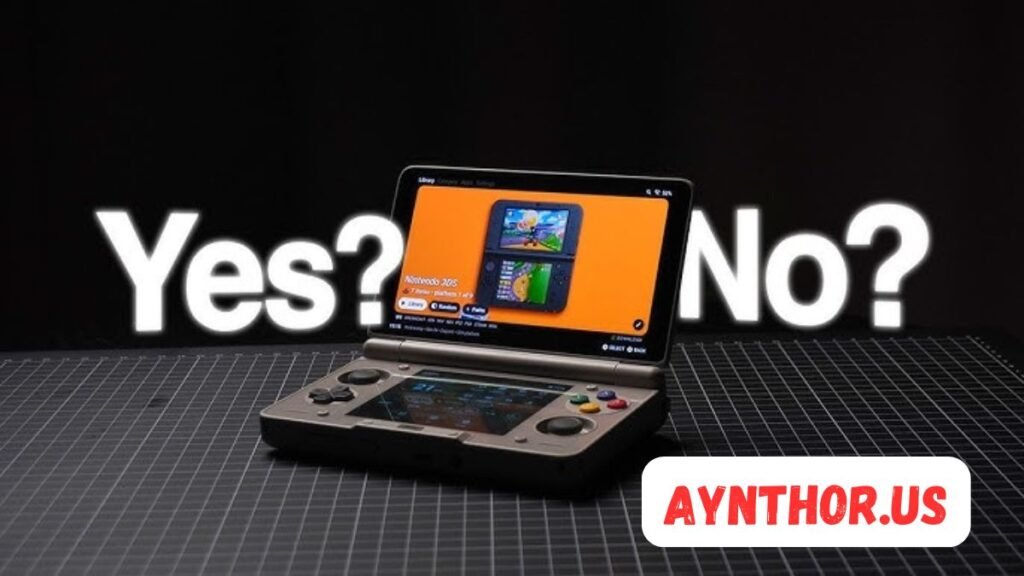
Given everything covered so far, it is worth being direct about who this ayn thor handheld genuinely suits versus who might be better served looking elsewhere. If you grew up loving the DS and 3DS era and have been waiting for a modern device that actually respects that dual-screen format instead of awkwardly cramming it onto a single panel, the Thor is close to a perfect match for that specific nostalgia. Combine that with strong general emulation support across most retro consoles people care about, and it becomes an easy recommendation for the dedicated retro gaming crowd.
It also makes a lot of sense for buyers who want genuine flexibility rather than a single-purpose device. Between Android app support, cloud gaming compatibility, and PC game streaming through tools like GameHub, the Thor comfortably covers far more ground than a typical dedicated retro handheld ever could. If the idea of one pocketable device handling everything from classic Game Boy titles through to streaming your Steam library appeals to you, this is genuinely one of the strongest options currently available in that broader category.
On the flip side, if your primary interest is pure Windows PC gaming with native compatibility for your existing Steam library without any streaming or emulation layer involved, a device like the Steam Deck or ROG Ally remains the more straightforward choice, since the Thor’s Android foundation means it approaches PC games differently rather than natively. Similarly, if long marathon gaming sessions with maximum ergonomic comfort are your top priority, the Thor’s more compact, grip-light clamshell shape may not be your ideal fit compared to bulkier ayn thor handheld specifically designed with pronounced side grips in mind.
Final Verdict on the AYN Thor Handheld
Stepping back and looking at the complete picture, the AYN Thor earns its reputation as one of the standout ayn thor handheld releases of 2026, and it does so by committing fully to an identity that few competitors are even attempting right now. Rather than chasing the biggest benchmark numbers or the most powerful chip on paper, it focuses on delivering an experience, leaning into nostalgia through its dual-screen clamshell design while still backing that concept up with genuinely capable modern hardware underneath.
The strengths here are real and consistent across nearly every review and hands-on account available: sharp, vibrant AMOLED displays on both panels, drift-resistant Hall effect controls, active cooling that keeps performance stable during demanding sessions, and a software foundation flexible enough to handle everything from decades-old retro classics through to streaming a current PC gaming library. The weaknesses are relatively minor by comparison, mostly limited to cosmetic hinge marks, occasional panel inconsistency, and fan noise under heavy load, none of which fundamentally undermine the overall experience for most buyers.
For anyone who has been waiting for a device that actually understands what made dual-screen gaming special in the first place, while still delivering the kind of raw performance and software flexibility that modern gamers expect, the AYN Thor is genuinely one of the most interesting ayn thor handheld you can buy right now. It will not replace a full gaming PC, and it is not trying to, but as a dedicated, versatile, and thoughtfully built portable gaming companion, it has earned every bit of the attention it has been getting throughout 2026.
Frequently Asked Questions
What makes the AYN Thor different from other Android gaming handhelds? Its dual AMOLED clamshell design sets it apart from the typical single-screen slab layout most Android handhelds use.
Which AYN Thor model offers the best overall value? The Base model is widely considered the sweet spot thanks to its Snapdragon 8 Gen 2 chip, Wi-Fi 7, and 4K output.
Can the AYN Thor handle PS2 emulation smoothly? Yes, most PS2 titles run well on the Snapdragon 8 Gen 2 models once emulator settings are properly configured.
Is Nintendo Switch emulation reliable on this device? Lighter Switch titles run smoothly, while more demanding games may need settings adjustments for consistent performance.
Does the AYN Thor support streaming PC games? Yes, apps like GameHub and GameNative let owners stream or download titles from their existing Steam and GOG libraries.
How long does the battery typically last? Battery life varies from several hours during light retro gaming down to shorter sessions during intensive emulation or streaming.
Is the AYN Thor better than the AYN Odin 3? It depends on priorities, since the Odin 3 offers more raw power while the Thor offers a unique dual-screen experience.
Are there any common hardware issues to watch for? Some units show minor hinge pressure marks on the screen or slight OLED panel inconsistency, which are worth checking early.
Does the AYN Thor get loud during heavy gaming sessions? The internal cooling fan becomes noticeably audible under demanding workloads, though it remains far from overwhelming.
Who is the AYN Thor best suited for? It is ideal for retro gaming fans, DS and 3DS emulation enthusiasts, and anyone wanting one versatile portable gaming device.

Post Comment