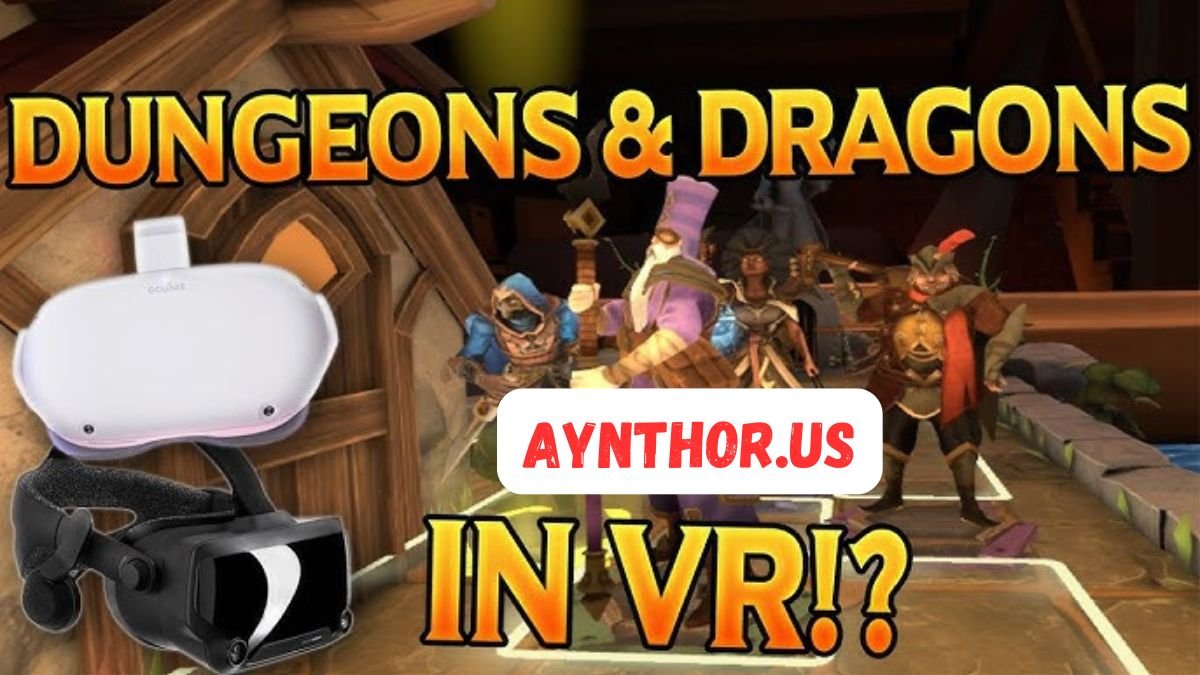
VR DND Game: The Complete Guide to Virtual Reality Dungeons & Dragons Adventures
Introduction
The idea of stepping directly into a fantasy world has fascinated gamers for decades. Tabletop role-playing games like Dungeons & Dragons let players imagine castles, dragons, enchanted forests, mysterious caves, and epic battles using nothing more than dice and creativity. At the same time, virtual reality has transformed the gaming industry by making players feel as though they are physically inside the game world. When these two concepts come together, the result is an exciting VR DND game experience that combines imagination with immersive technology.
A modern VR DND game is more than simply wearing a headset and fighting monsters. It allows players to interact with magical environments, communicate naturally with teammates, manipulate objects using their hands, cast spells through gestures, and experience adventures from a first-person perspective. Instead of describing actions around a table, players can actually perform many of them within a virtual environment. This creates a stronger emotional connection to the adventure while maintaining the storytelling spirit that has always defined tabletop role-playing games.
The popularity of VR technology continues to grow every year, and developers have started exploring ways to recreate tabletop role-playing in immersive digital spaces. Some games faithfully adapt classic D&D mechanics, while others take inspiration from them to create unique fantasy adventures. Whether you are a lifelong dungeon master or someone discovering fantasy role-playing for the first time, understanding how a VR DND game works can help you choose the perfect adventure.
What Is a VR DND Game?
A VR DND game is a virtual reality role-playing experience inspired by the mechanics, storytelling, teamwork, and fantasy settings commonly associated with Dungeons & Dragons. Rather than simply clicking buttons or moving characters across a screen, players physically interact with the world using VR controllers or hand tracking. Every movement feels more natural because the player becomes the character inside the adventure.
Unlike traditional tabletop sessions where players imagine locations through descriptions, VR environments visually recreate castles, forests, underground dungeons, taverns, magical towers, and mysterious ruins. These detailed settings make exploration feel authentic while allowing players to appreciate the artistic design that would otherwise exist only in their imagination.
Many VR fantasy games borrow core elements from D&D, including character classes, leveling systems, cooperative gameplay, magical equipment, loot collection, quests, boss battles, and storytelling. Some titles even allow a dungeon master to control encounters in real time, making every session different depending on player decisions.
Why VR Is Perfect for Fantasy Role-Playing

Fantasy has always relied on imagination. Readers imagine magical kingdoms, tabletop players imagine dragons soaring overhead, and video game players visualize fantasy worlds through screens. Virtual reality bridges these experiences by placing the player directly into the environment instead of asking them to picture it mentally.
Standing face to face with a towering dragon creates a completely different emotional response than viewing one on a monitor. The enormous scale, realistic sounds, and ability to physically look around the creature make encounters feel incredibly memorable. This heightened immersion is one of the biggest reasons a VR DND game feels so engaging.
Role-playing also becomes much more natural in virtual reality. Players can wave, point, kneel, hide behind cover, inspect magical artifacts, or celebrate victories using natural body movements. These physical actions encourage deeper role-playing because communication extends beyond voice chat.
Another important advantage is teamwork. Traditional multiplayer games rely heavily on menus and interface elements, while VR allows teammates to physically interact. A wizard can point toward approaching enemies, a fighter can raise a shield to protect allies, and a rogue can silently signal danger. These moments feel organic and strengthen group coordination throughout the adventure.
The Evolution of Dungeons & Dragons into Virtual Reality
Dungeons & Dragons first appeared in the 1970s and introduced millions of players to collaborative storytelling. Instead of competing against each other, players worked together to overcome challenges while a dungeon master guided the narrative. This format inspired countless books, movies, novels, and video games over the following decades.
As technology improved, developers created computer RPGs based on tabletop mechanics. Games such as Baldur’s Gate, Neverwinter Nights, and other fantasy RPGs helped bring D&D-inspired adventures to digital platforms. These games preserved storytelling while adding visual environments, animations, and voice acting.
Virtual reality represents the next logical step in this evolution. Instead of controlling a hero with a keyboard or controller, players become the hero themselves. Looking around naturally, swinging weapons, drawing bows, solving environmental puzzles, and interacting directly with companions all contribute to a much stronger sense of presence.
Although current VR hardware still has limitations compared to unlimited human imagination, modern technology has reached a point where immersive fantasy adventures are increasingly convincing. Every generation of VR headsets introduces better graphics, improved motion tracking, and enhanced comfort, making the future of the VR DND game genre incredibly promising.
Essential Features of a Great VR DND Game
Not every fantasy VR title successfully captures the spirit of tabletop role-playing. The best games combine immersive technology with meaningful gameplay systems that encourage creativity rather than repetitive combat.
Strong storytelling is one of the most important features. Players should feel as though every quest contributes to a larger narrative. Memorable characters, unexpected plot twists, moral decisions, and evolving relationships help create adventures worth remembering long after the headset is removed.
Character customization is another key component. Players enjoy creating unique heroes by selecting appearance, equipment, skills, magical abilities, and combat styles. A flexible progression system allows each character to develop differently over time, increasing replay value.
Interactive environments also separate excellent VR experiences from average ones. Players should be able to open treasure chests, examine books, light torches, pull levers, solve puzzles, climb obstacles, and manipulate magical artifacts. These interactions transform exploration from simple movement into genuine adventure.
Finally, cooperative multiplayer enhances nearly every VR DND game. Working alongside friends to solve mysteries, defeat monsters, and complete dangerous quests closely resembles the social experience that has always defined tabletop role-playing.
Character Classes and Player Roles
Character classes are one of the defining features of fantasy role-playing. They allow every player to contribute differently while encouraging teamwork during exploration and combat. Many VR fantasy games include classes inspired by traditional tabletop systems.
Warriors excel in close combat and often carry swords, shields, axes, or heavy armor. In virtual reality, physically blocking attacks with a shield or swinging a sword creates satisfying and engaging gameplay. Timing becomes just as important as character statistics.
Wizards and sorcerers bring magical power to the battlefield. Instead of simply selecting spells from menus, many VR games allow players to perform hand gestures or combine magical elements to cast powerful attacks. Launching fireballs or summoning lightning using natural movements significantly increases immersion.
Rangers, rogues, clerics, and bards also introduce diverse playstyles. Archers rely on realistic bow mechanics, rogues focus on stealth and agility, clerics heal injured allies, and bards support teammates through magical music or buffs. When every class feels unique, teamwork becomes more rewarding because players depend on one another’s strengths.
Combat in a VR DND Game
Combat changes dramatically in virtual reality because physical movement replaces many traditional button presses. Swinging a sword, blocking with a shield, firing arrows, or casting spells all require real actions, making every encounter feel far more personal.
Good VR combat balances realism with accessibility. If every swing required perfect real-world strength, gameplay would quickly become exhausting. Developers therefore design systems that reward timing, positioning, and technique without demanding excessive physical effort from players.
Enemy variety is equally important. Skeleton warriors, goblins, giant spiders, dragons, undead creatures, magical beasts, demons, trolls, and corrupted knights all require different strategies. Learning enemy attack patterns encourages players to adapt rather than repeating the same tactics.
Boss encounters often become unforgettable highlights. Standing beneath an enormous dragon or confronting an ancient lich in a massive throne room creates an impressive sense of scale that flat-screen gaming struggles to match. These encounters combine environmental awareness, teamwork, puzzle-solving, and combat into exciting multi-stage battles.
Magic Systems That Feel Truly Magical
Magic is central to almost every VR DND game, and virtual reality offers unique opportunities to make spellcasting feel believable. Instead of clicking icons, players often perform gestures, draw magical symbols, or combine elemental powers using motion controls.
Gesture-based spellcasting encourages practice and mastery. Players gradually learn how to cast spells more efficiently while developing muscle memory that mirrors a wizard learning powerful magic through years of study. This makes character progression feel connected to player skill.
Environmental interaction adds another layer of depth. Ice spells may freeze rivers, lightning can activate ancient mechanisms, fire burns obstacles, and telekinesis allows players to manipulate distant objects. Magic becomes useful for exploration as well as combat, encouraging creative problem-solving.
Many developers also experiment with spell combinations. A teammate might create an oil-covered surface while another casts a fire spell to ignite the area. Similarly, freezing enemies before striking them with heavy weapons rewards coordination between different character classes.
Exploration and World Building
Exploration has always been a major part of fantasy role-playing, and virtual reality significantly enhances the experience. Walking through an ancient castle, entering mysterious caves, climbing mountain paths, or discovering forgotten temples feels much more impactful when viewed from a first-person perspective.
A well-designed fantasy world contains countless small details that reward curiosity. Hidden treasure rooms, abandoned campsites, mysterious journals, secret passages, magical shrines, and forgotten ruins all encourage players to investigate every corner of the environment instead of rushing toward the next objective.
Environmental storytelling also plays a major role. Rather than relying solely on dialogue, developers use architecture, lighting, music, scattered objects, and visual clues to tell the history of a location. A destroyed village may reveal evidence of an ancient battle, while an abandoned wizard’s tower hints at dangerous magical experiments through its surroundings alone.
Exploration becomes even more rewarding when the world feels alive. Wildlife roaming forests, merchants traveling between towns, weather changing dynamically, and non-player characters reacting to player choices all contribute to a believable fantasy setting. The more immersive the world becomes, the more memorable the overall VR DND game experience feels.
Multiplayer Adventures and Cooperative Gameplay
One of the biggest reasons tabletop role-playing games have remained popular for decades is the social experience they create. A VR DND game builds on this foundation by allowing players to adventure together inside the same virtual world. Instead of simply talking over a voice call, players can see each other’s movements, gestures, and reactions, making teamwork feel much more natural.
Cooperative gameplay encourages every party member to contribute according to their strengths. A heavily armored fighter can stand at the front to absorb damage while a wizard casts destructive spells from a distance. Meanwhile, a rogue can sneak around enemies to deliver critical attacks, and a healer keeps everyone alive during difficult encounters. These roles become even more meaningful when players physically perform their actions in virtual reality.
Communication is another major advantage of VR multiplayer. Players can point toward hidden paths, signal danger with hand gestures, celebrate victories with high-fives, or quietly coordinate strategies before entering a dangerous room. These natural interactions help recreate the feeling of sitting around a real gaming table while adding the immersion of a shared fantasy world.
The Role of the Dungeon Master in Virtual Reality
No discussion about a VR DND game would be complete without mentioning the dungeon master. In traditional Dungeons & Dragons, the dungeon master controls the world, narrates the story, manages monsters, and reacts to player decisions. This creative role remains one of the most exciting parts of tabletop gaming.
Some virtual reality experiences attempt to recreate this responsibility by giving one player powerful world-building tools. The dungeon master can place enemies, design encounters, control non-player characters, trigger environmental events, and adapt the adventure based on the party’s choices. This keeps every session fresh because no two campaigns unfold in exactly the same way.
Having a live dungeon master also allows for spontaneous storytelling. If players decide to ignore the main quest and explore an abandoned castle instead, the dungeon master can quickly create new challenges and unexpected discoveries. This flexibility captures the improvisational spirit that makes tabletop role-playing so memorable.
Character Progression and Leveling Systems
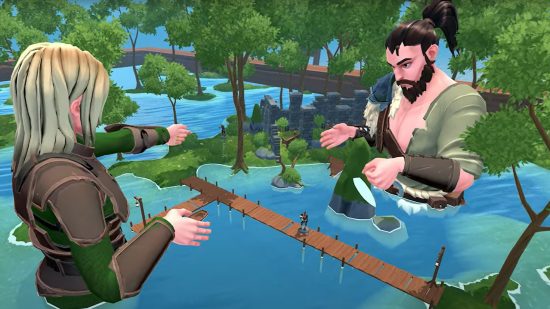
Character growth is one of the most rewarding aspects of any fantasy role-playing game. Players enjoy watching their heroes become stronger through experience, better equipment, and newly unlocked abilities. A well-designed VR DND game offers meaningful progression that rewards long-term play rather than simple grinding.
Experience points usually come from completing quests, defeating enemies, solving puzzles, or exploring hidden areas. As characters level up, they gain access to stronger abilities, additional health, improved magical powers, and specialized talents that match their chosen class. These upgrades make every achievement feel worthwhile.
Equipment progression is equally important. Discovering a legendary sword, enchanted shield, magical staff, or rare armor set gives players exciting goals beyond simply increasing their level. Rare items often introduce unique abilities that completely change combat strategies and encourage experimentation.
The best progression systems also include meaningful choices. Instead of automatically improving every statistic, players decide which skills to prioritize. A wizard may specialize in elemental magic while another focuses on healing and support spells. These decisions create unique characters even among players using the same class.
Weapons and Equipment in a VR DND Game
Weapons feel dramatically different in virtual reality because players physically handle them using motion controls. Swinging a massive battle axe requires different movements than thrusting a spear or firing a longbow. This physical interaction creates a stronger connection between the player and their chosen equipment.
Melee weapons often include swords, maces, war hammers, daggers, axes, and polearms. Each weapon type offers unique strengths and weaknesses. Heavy weapons deliver tremendous damage but swing more slowly, while lighter weapons allow faster attacks and greater mobility.
Ranged combat introduces another layer of immersion. Drawing a bowstring, aiming carefully, and releasing an arrow feels satisfying because every shot depends on the player’s own coordination. Crossbows, magical staffs, throwing knives, and enchanted firearms may also appear depending on the game’s fantasy setting.
Armor plays a significant role as well. Heavy plate armor offers superior protection but may reduce movement speed, while lighter armor allows faster dodging at the cost of lower defense. Finding the right balance between offense and survivability becomes an important part of character development.
Magic, Skills, and Ability Customization
Every player approaches fantasy combat differently, which is why ability customization remains essential in a successful VR DND game. Rather than forcing everyone into identical playstyles, developers provide numerous skill trees and magical disciplines that allow heroes to develop unique strengths.
Offensive spellcasters may unlock devastating firestorms, lightning bolts, meteor showers, or arcane explosions capable of eliminating multiple enemies simultaneously. Defensive mages might specialize in magical barriers, protective enchantments, or crowd-control spells that keep allies safe during difficult encounters.
Support abilities are equally valuable. Healing magic, temporary shields, movement buffs, resurrection spells, and enemy debuffs all encourage teamwork. A well-balanced party rarely depends on raw damage alone, especially during high-level adventures where strategy matters more than simple strength.
Many VR games also reward creative combinations. Players may freeze enemies before shattering them with heavy weapons or use wind magic to spread fire across a battlefield. These interactions encourage experimentation instead of repetitive combat routines.
Exploring Dungeons, Castles, and Fantasy Worlds
Exploration is often just as exciting as combat in a VR DND game. Every castle hallway, underground dungeon, enchanted forest, and forgotten temple has the potential to hide valuable treasure, dangerous monsters, or important story elements waiting to be discovered.
Dungeons remain one of the genre’s defining features. Players navigate dark corridors, solve environmental puzzles, disable deadly traps, and search for hidden rooms while constantly wondering what lies beyond the next doorway. The first-person perspective of virtual reality makes every shadow and mysterious sound feel more intense.
Castles provide a completely different atmosphere. Grand halls, royal chambers, libraries filled with magical knowledge, hidden passages, and ancient throne rooms create opportunities for both exploration and storytelling. These locations often reveal the history of kingdoms through visual details rather than lengthy explanations.
Outdoor environments are equally impressive. Dense forests, snowy mountains, volcanic landscapes, mystical swamps, peaceful villages, and bustling cities all contribute to a believable fantasy world. Diverse environments ensure that exploration never becomes repetitive, keeping players excited about every new destination.
Quests That Encourage Creative Thinking
One of the greatest strengths of tabletop role-playing is player freedom. Rather than solving every problem through combat, players often negotiate with enemies, investigate mysteries, rescue innocent characters, or solve ancient puzzles. A high-quality VR DND game embraces this same philosophy.
Main story quests usually drive the overall narrative by introducing powerful villains, magical artifacts, and world-changing events. These missions provide structure while gradually revealing the larger conflict facing the player’s party.
Side quests offer additional opportunities for exploration and character development. Helping villagers recover stolen supplies, hunting dangerous creatures, escorting merchants through monster-infested forests, or investigating haunted ruins adds variety to the adventure while rewarding players with valuable equipment and experience.
Puzzle-based quests are particularly effective in virtual reality. Rotating ancient mechanisms, aligning magical crystals, deciphering forgotten languages, or manipulating enchanted objects with hand movements creates memorable challenges that feel far more interactive than traditional point-and-click puzzles.
Artificial Intelligence and Enemy Behavior
Enemy intelligence significantly affects how enjoyable combat feels. Poorly designed opponents become predictable after only a few encounters, while intelligent enemies constantly force players to adapt their strategies. Modern VR DND game developers increasingly invest in smarter artificial intelligence to create more believable battles.
Basic enemies may charge directly toward players, but stronger opponents often cooperate with one another. Archers remain at long range while heavily armored warriors protect them. Spellcasters cast protective barriers or healing spells, forcing players to prioritize targets carefully.
Boss enemies typically feature multiple combat phases that evolve throughout the encounter. A dragon might begin by attacking from the air before landing to engage in close combat. A powerful necromancer could summon undead reinforcements once their health falls below a certain point. These evolving battles prevent encounters from feeling repetitive.
Adaptive enemy behavior also improves replayability. Some games randomize patrol routes, attack patterns, or environmental hazards so that repeated dungeon runs remain challenging even for experienced players.
Graphics, Audio, and Immersion
Visual quality contributes significantly to immersion, but graphics alone do not create a memorable VR DND game. Lighting, environmental detail, animation quality, sound design, and music all work together to convince players that the fantasy world truly exists.
Modern VR headsets display remarkably detailed environments filled with realistic textures, dynamic weather, magical lighting effects, and lifelike character animations. Walking through a torch-lit dungeon or watching sunlight filter through an enchanted forest creates an atmosphere that draws players deeper into the adventure.
Sound design is equally important. The distant roar of a dragon, echoing footsteps inside ancient ruins, the crackling of magical energy, and the rustling of leaves in a forest all provide subtle environmental clues that increase realism. Spatial audio allows players to determine the direction of approaching enemies simply by listening.
Music completes the experience by reinforcing emotion. Peaceful orchestral melodies accompany quiet exploration, while dramatic battle themes increase tension during boss encounters. Well-composed soundtracks often become inseparable from the memories players create throughout their adventures.
The Future of VR DND Games
The future of the VR DND game genre looks incredibly promising as hardware and software continue to improve. Better displays, lighter headsets, more accurate motion tracking, and advanced hand-tracking technology will make virtual adventures feel increasingly natural over the coming years.
Artificial intelligence is also expected to transform role-playing experiences. Instead of relying entirely on scripted dialogue, future non-player characters may respond dynamically to player decisions, creating conversations and stories that feel more spontaneous and believable.
Cloud computing and faster internet connections will make larger multiplayer worlds possible. Players from around the globe may gather in persistent fantasy realms where adventures continue evolving even when individual parties log off. This could blur the line between tabletop campaigns and massively multiplayer online role-playing games.
Perhaps the most exciting possibility is the continued blending of imagination and technology. As developers better understand what makes tabletop role-playing so special, future VR experiences are likely to offer even greater freedom, creativity, and storytelling depth. Rather than replacing traditional Dungeons & Dragons, these immersive adventures will provide another exciting way for fantasy fans to experience unforgettable journeys.
Choosing the Best VR DND Game for Your Play Style
With more fantasy VR titles becoming available every year, choosing the right VR DND game depends largely on what kind of experience you want. Some players are primarily interested in deep storytelling and role-playing, while others enjoy fast-paced combat, cooperative multiplayer, or endless dungeon exploration. Understanding your own preferences will help you select a game that provides hours of entertainment rather than one that feels repetitive after a few sessions.
Story-focused players should look for games with memorable characters, branching dialogue, meaningful choices, and immersive quests. These experiences often reward careful exploration and interaction with the world instead of simply defeating enemies. Every decision can influence the outcome of the adventure, making each playthrough feel personal and unique.
Players who enjoy action should prioritize games with responsive combat systems, satisfying weapon mechanics, and diverse enemy encounters. A fantasy world filled with exciting boss battles, magical abilities, and rewarding loot can keep combat fresh for dozens of hours. Multiplayer fans, meanwhile, should focus on games with reliable online features, strong communication tools, and balanced class systems that encourage teamwork.
Tips for Beginners Entering a VR DND Game
Starting your first VR DND game can feel overwhelming because there are often many mechanics to learn. Between character creation, equipment management, combat systems, magic, crafting, and exploration, new players may initially wonder where to begin. Fortunately, most challenges become much easier after spending a few hours with the game.
Begin by selecting a character class that matches your preferred playstyle. If you enjoy straightforward combat, a warrior or knight is usually an excellent choice. Players who prefer ranged attacks may enjoy an archer or ranger, while those interested in magical abilities should consider a wizard or sorcerer. Choosing a familiar playstyle allows you to focus on learning the game’s mechanics rather than struggling with an overly complex character.
Take your time exploring every area. Many beginners rush through quests and accidentally miss valuable equipment, hidden treasure, useful crafting materials, or optional storylines. Exploring carefully often leads to stronger characters and a richer understanding of the game’s world.
Do not hesitate to experiment with different weapons and abilities. A spell or weapon that seems weak at first may become incredibly effective when combined with another skill. Learning through experimentation is one of the most enjoyable parts of any role-playing game.
Common Mistakes Players Should Avoid
Even experienced gamers occasionally develop habits that reduce their enjoyment of a VR DND game. Fortunately, most mistakes are easy to avoid once players recognize them.
One common mistake is ignoring teamwork during multiplayer adventures. Some players focus entirely on dealing damage while forgetting to protect teammates, communicate effectively, or complete objectives together. Successful parties usually coordinate their actions rather than acting independently.
Another frequent mistake is neglecting character progression. Players sometimes continue using low-level equipment long after better alternatives become available. Regularly upgrading weapons, armor, and abilities ensures that future encounters remain manageable instead of becoming unnecessarily difficult.
Many players also overlook environmental interaction. Fantasy worlds are often filled with hidden switches, secret doors, destructible objects, collectible journals, and optional puzzles. Paying attention to your surroundings often results in valuable discoveries that players who rush through levels never experience.
Finally, some players rely on the same combat strategy for every encounter. Different enemies require different tactics, and adapting your approach usually leads to more enjoyable and successful adventures.
How VR Technology Continues to Improve Fantasy Gaming
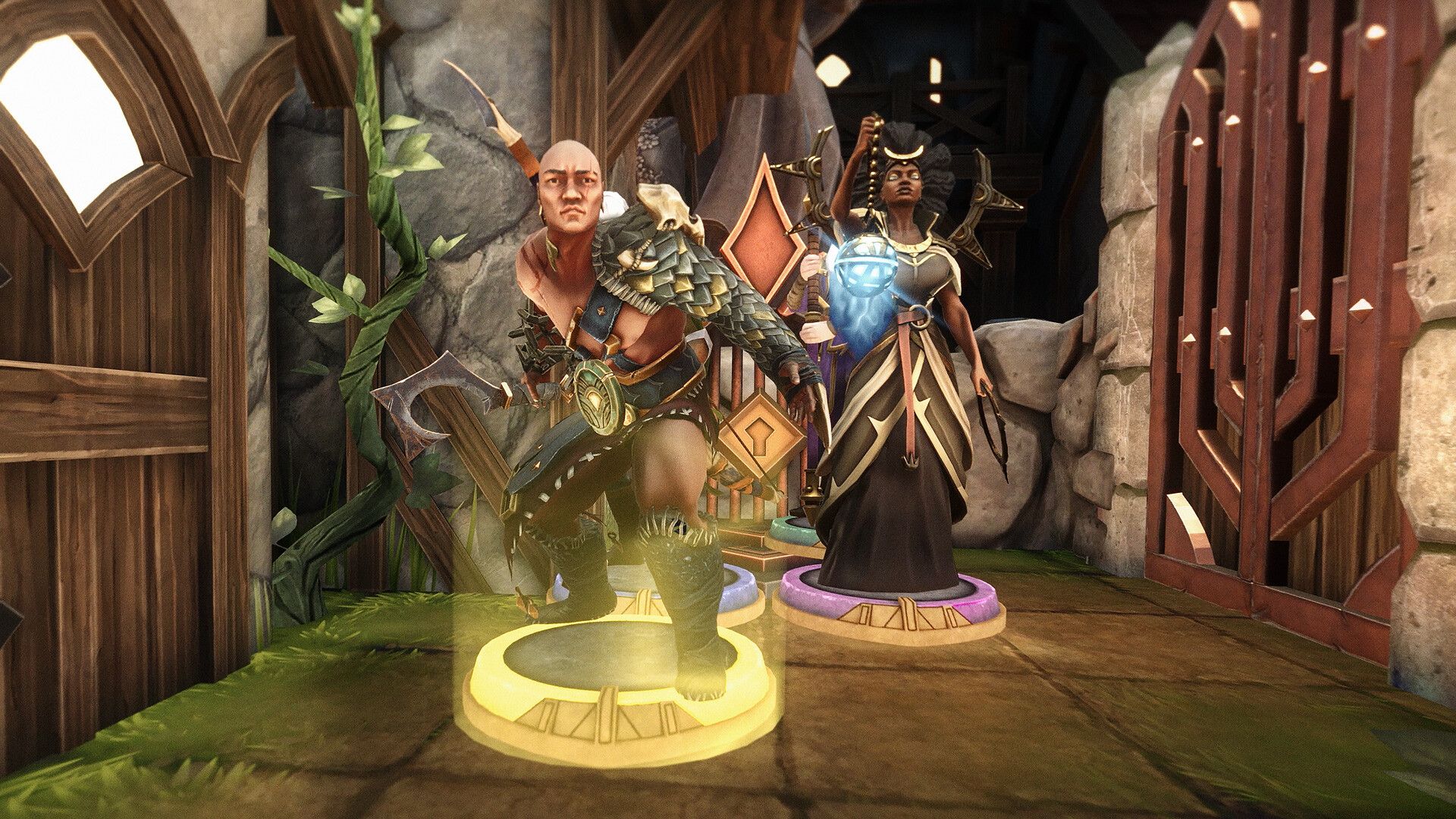
Virtual reality has improved dramatically since the first consumer headsets became available. Higher display resolutions, wider fields of view, lighter hardware, and improved motion tracking have all contributed to more comfortable and immersive gaming experiences. These advancements directly benefit every modern VR DND game by making exploration and combat feel increasingly realistic.
Hand tracking represents one of the most exciting developments in VR technology. Instead of relying exclusively on controllers, players can naturally interact with objects using their own hands. Picking up magical artifacts, opening treasure chests, casting spells, or solving environmental puzzles becomes even more intuitive.
Eye-tracking technology may also transform future fantasy games. Developers could create more realistic conversations by allowing non-player characters to respond naturally to where players are looking. Magic systems might even incorporate eye movement into advanced spellcasting mechanics.
Wireless VR headsets have further improved immersion by removing restrictive cables. Players can move more freely during combat, exploration, and puzzle-solving, making long adventures significantly more comfortable than earlier virtual reality experiences.
Why VR DND Games Appeal to Both New and Veteran Players
One of the most impressive aspects of the VR DND game genre is its ability to attract players with very different backgrounds. Longtime tabletop fans appreciate seeing classic fantasy concepts brought to life, while newcomers enjoy accessible adventures that introduce role-playing mechanics without requiring years of experience.
Veteran Dungeons & Dragons players often recognize familiar ideas such as character classes, magical equipment, cooperative gameplay, dungeon exploration, and storytelling. Although virtual reality cannot perfectly replicate the limitless creativity of tabletop gaming, it offers an exciting new way to experience many of the same themes.
New players benefit from visual demonstrations rather than lengthy rulebooks. Instead of imagining how a spell works, they can physically cast it. Instead of picturing an ancient castle, they can walk through one. This accessibility lowers the barrier to entry while maintaining the excitement of fantasy role-playing.
The combination of social interaction, exploration, combat, character progression, and immersive technology creates experiences that appeal to a wide variety of gaming preferences. Whether someone enjoys action games, puzzle solving, storytelling, or cooperative adventures, there is likely a VR fantasy title that suits their interests.
Final Thoughts
The rise of the VR DND game represents an exciting chapter in the evolution of fantasy gaming. By combining immersive virtual reality technology with the creativity and teamwork that have always defined tabletop role-playing, developers have created experiences that feel both familiar and refreshingly new. Players are no longer limited to imagining fantasy worlds—they can step inside them, interact with them, and become active participants in unforgettable adventures.
While today’s VR role-playing games continue to evolve, they already demonstrate the enormous potential of the genre. Rich storytelling, detailed environments, satisfying combat, meaningful character progression, and cooperative multiplayer all contribute to experiences that capture the spirit of classic fantasy while embracing modern technology. Every improvement in VR hardware opens new possibilities for even deeper immersion and more creative gameplay.
Whether you are a longtime Dungeons & Dragons enthusiast or someone curious about virtual reality for the first time, exploring a VR DND game can be an incredibly rewarding experience. From battling dragons and solving ancient mysteries to forming friendships with fellow adventurers, these games offer countless opportunities for memorable stories that continue long after the headset comes off. As technology advances, the future of fantasy role-playing in virtual reality looks brighter than ever, promising adventures that are even more immersive, interactive, and unforgettable.
FAQs
What is a VR DND game?
A VR DND game is a virtual reality fantasy role-playing game inspired by Dungeons & Dragons mechanics and storytelling.
Can you play a VR DND game with friends?
Yes, many VR DND games support cooperative multiplayer adventures.
Do I need to know Dungeons & Dragons rules before playing?
No, most VR DND games are designed to be beginner-friendly.
Which VR headset is best for VR DND games?
Popular options include Meta Quest, Valve Index, HTC Vive, and PlayStation VR2, depending on the game.
Are VR DND games physically demanding?
Most involve moderate movement, but many offer comfort settings and seated play options.
Can I play a VR DND game alone?
Yes, many titles include engaging single-player campaigns alongside multiplayer modes.
Do VR DND games include magic and character classes?
Yes, most feature classes, spells, leveling systems, and fantasy equipment.
Are VR DND games suitable for beginners?
Yes, many games include tutorials that help new players learn the mechanics quickly.
How long does a typical VR DND game take to complete?
Campaign lengths vary from several hours to well over 50 hours depending on the game.
Is the future bright for VR DND games?
Yes, improving VR technology and growing developer interest continue to expand the genre.
Also read: Purple Hybrid 2: A Complete Guide to Comfort, Support, Performance, and Long-Term Value











Post Comment